
Welcome to my blog, the new technology I want to introduce today is Human Organ Printing. Compared to this new technology, everyone is more familiar with 3D printing technology. Organ printing is a medical application of 3D printing technology. We can think that Human Organ Printing technology is a sub-technology independent of 3D printing . The development of this new technology is no less than the invention of any Nobel Prize.For example: China is developing country with a huge population. In 2014 year,There are more than 50 million patients who are not physically free, most of them are disabled. More than 3 million people have been amputated due to lack of reconstruction surgery in the past; the country has nearly 3 million bone defects and bone loss each year; the number of traumas caused by car accidents and wars is hundreds of thousands. Therefore, just studying 3D printed bones can help more than 50 million Chinese regaining freedom of movement, and spending per year due to disability is also greatly reduced. If organ printing can replicate a brand new lung or liver, it can help a lot of people around the world to smoke.The concept of Human Organ Printing was first proposed by professors at Clemson University, University of Missouri, and Drexel University in the United States around 2000. After 2003, Mironv V and Boland T published an article in Trends in Biotechnology magazine – “3D Print for medicine.” This is the origin of organ printing now.
3D printing for the manufacture of artificial organs has been a major topic in bioengineering research. As the rapid manufacturing techniques brought about by 3D printing become more and more efficient, their applicability in the synthesis of artificial organs becomes more apparent. Organ printing using 3D printing can be performed using a variety of techniques, each of which can be adapted to different types of organs, and their advantages are also different. The two most prominent types of organ printing are Drop-based bioprinting (Inkjet) and Extrusion bioprinting. Many other printing technologies do exist, they are not commonly used or are still under development. As early as 2003, Thomas Boland patented the use of inkjet printing for cells in the United States.
Although organ printing technology is a medical application of 3D printing, it differs from normal 3D printing technology in that it differs mainly in printed materials and models. In terms of materials: materials used for 3D printing are usually composed of alginate or fibrin polymers, and printing materials must fit a broad spectrum of criteria. Hydrogel alginates has become one of the most commonly used materials in organ printing research because They are highly customizable and can be fine-tuned to simulate certain mechanical and biological properties unique to natural tissue. From a model point of view, not all human organs can be used directly by the dog as long as they are printed. Such as the brain, it is also a problem that how many nerves are cultivated after printing. Therefore, the model that needs to be cultivated is also a major feature of organ printing.
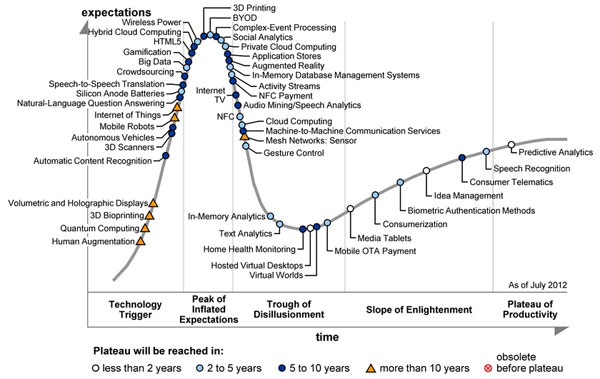
The emergence of 3D printing has had a huge impact on the entire medical system. This is obviously an emerging technology, its emergence has caused more funds to flow into the industry, and socially disabled people are more likely to recover. . Its presence has made many patients with more organs or bones have more choices. They can choose to change to a “new” rather than a long treatment. organ. In 2013, Gartner, the world’s most authoritative IT research and consulting firm, released a report on the maturity of the 2012-2013 technology curve. The report covers as many as 1,900 cutting-edge technologies, spread across 92 categories. Can see that 3D printing technology will become an absolute hot spot in the next 5-10 years, and 3D printing technology-derived 3D bio-printing technology will show its talents in the next 10 years. When it can print more human organs When it is an organ, and it is possible to cultivate cells in it. This technology will definitely be the best medical treatment!
Reference
PubLmed,Organ printing: computer-aided jet-based 3D tissue engineering,2003,https://www.ncbi.nlm.nih.gov/pubmed/12679063
JUSTIA,Patentsby Inventor Thomas Bolandhttps,2013,https://patents.justia.com/inventor/thomas-boland
China Disabled Persons’ Federation,Statistical Communique on the Development of the Work on Persons with Disabilities in 2014,http://www.cdpf.org.cn/english/Resources/statistics/201603/t20160323_545438.shtml
Gartner,Hype Cycle for Emerging Technologies, 2013,https://www.gartner.com/en/documents/2571624


 Zhang tianle